Why Do Some Kids Take Longer to Learn to Read
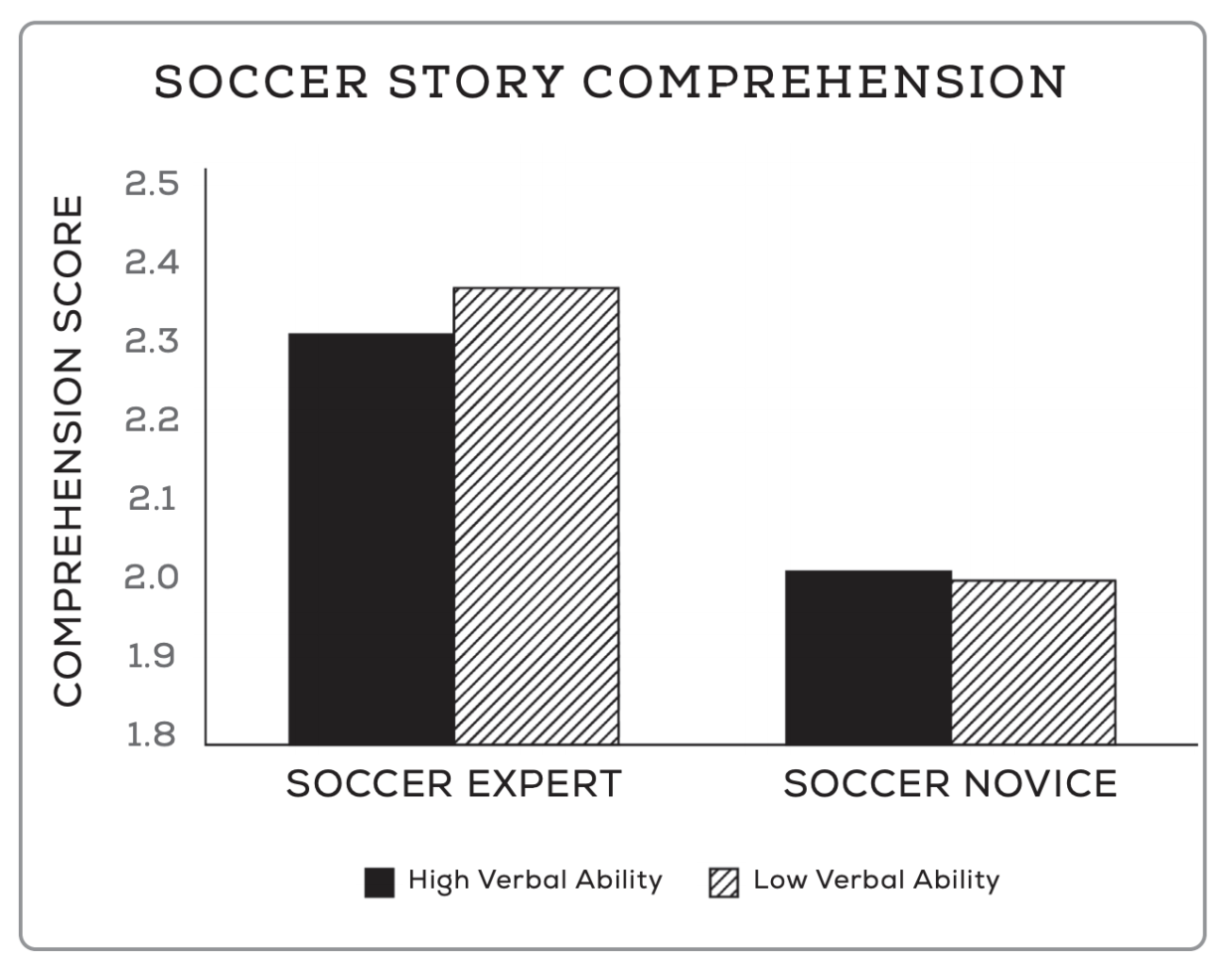
Among my favorite volume genres is histories of 19th‑century polar expeditions (spoiler warning: it's super, super cold and a lot of people die). My married man, Jesse, and I share many interests, but not this ane. The last fourth dimension I read one of these books and tried to tell him what was happening, he retaliated past explaining the details of the volume he was reading, which was—I'1000 totally not making this up—a history of the German language Federal Statistical Part. Just for me, a shut second to books on polar explorers are books on neuroscience, which is where I think it makes sense to start in understanding the question of how kids larn to read. Because before thinking about how kids learn to read, it is useful to think well-nigh how adults (or fluent readers in general) actually read. Of item relevance is the question of whether you read past recognizing words or by sounding them out. If y'all're a fluent developed reader, you probably recall that y'all read by recognizing words and just knowing what they await similar. Basically, you perceive yourself using some kind of pattern recognition—when you see the word read, you recognize it as "read." You practise not think of yourself as sounding information technology out. And for a give-and-take like read, this is probable right. For short, common words, we seem to read through pattern recognition. (How do we know this? Ane piece of evidence is that for short words—say, under 8 characters—the length of the give-and-take doesn't influence our reading speed. If nosotros were sounding it out, this wouldn't be the case. Other evidence comes from brain scans that await at how the brain processes real versus imaginary words.) Simply it turns out that although you lot exercise non perceive it, y'all actually also make use of a fair amount of phonics (basically, chunking words and sounding them out) inside your brain when reading. You exercise it fast! Just that doesn't mean you don't do it. And it's the reason nosotros tin can procedure words we oasis't seen before, or imaginary words. For case, here's a word I made up: delumpification. You can likely read this, in the sense that you could pronounce it. And beyond that, yous probably can work out what it would mean (something like, "the process of removing a lump"). Only this isn't considering you recognize the give-and-take! Implicitly, your brain is sounding it out in pieces it knows: de / lump / ifi cation (perhaps—our exact knowledge about how this type of give-and-take gets chunked isn't perfect). Understanding this procedure, and in particular understanding the sense in which even fluent readers rely on sounding out to read, has implications for how kids learn to read. Notably, it is cardinal to the great debate over teaching phonics versus "whole language" reading. Traditionally, reading has been taught through the use of phonics—kids learn the sounds of letters, then how they fit together (the consonant‑vowel‑consonant words), then common exceptions ("if there is an eastward at the cease, a says its own name"; "ou" says "oww," etc.), so weirder things (the silent m and and then on). If you're familiar with them, think of the Bob Books. They commencement with just 4 letters (a, m, s, and t) and the first volume in its entirety is: "Mat, Mat sat, Sam, Sam sat, Mat sat on Sam, Sam sat on Mat, Mat sat, Sam sabbatum." The side by side volume introduces more than letters (c, d), and then on. Phonics has been used (successfully) for decades, probably hundreds of years. But at some betoken, some people suggested information technology might non be the all-time arroyo. Get-go in the late 1960s, a movement (credited to, among others, linguist Noam Chomsky) suggested that it might be better to teach reading with a more "whole‑linguistic communication" approach. In particular, this motion argued for forgetting about phonics and immersing children in linguistic communication and stories with the expectation that they would, effectively, learn design recognition to read words. To simplify somewhat, there were a couple of arguments in favor of this. 1 is that phonics is boring. That "Mat" story from the Bob Books? No five‑ or 6‑year‑quondam will observe it exciting. It's a chore. Similarly, drilling on the millions of exceptions in the English language language is tedious. Why on globe is the g silent? A whole‑language approach skips right to improve stories—not Harry Potter, but at least something that'south not quite then pedantic. And so maybe it holds kids' interest better. The other point this movement made is that when adults read, they read through blueprint recognition, and if that'southward where kids are headed anyway, we might as well start there. The whole‑language approach got some traction in the 80s and 90s; at some bespeak, California public schools adopted a version of it, as did Massachusetts. As information technology turns out, however, ignoring phonics is not an appropriate fashion to teach reading. For i matter, as mentioned earlier, adults reading past pattern recognition alone is incorrect. Fifty-fifty fluent readers are using a course of sounding out to read many words. And then chunking words and putting them back together is a key tool. This suggests that we ignore it at our peril. But we can likewise run into the failure of this whole‑language arroyo in experimental data. A team of researchers at Stanford showed this in a clever experiment in which they invented a new script and attempted to teach information technology to undergraduates. The script had English audio correspondence, merely the messages looked different. Some undergraduates were encouraged to larn using a phonics frame (basically, to work out which squiggle corresponded to which audio) and others were encouraged to use a whole‑word approach (memorizing which picture corresponded to which word). The students using the whole‑give-and-take approach initially did better, but once again words were added, they were unable to keep up; phonics facilitated the reading of a larger number of words with a smaller number of symbols. A large number of studies bear witness that phonics‑based reading pedagogy is more successful than whole‑language reading. Some people accept even argued that the California adoption of this whole‑language approach was responsible for a precipitous decline in examination scores in California in the 80s and 90s, although this is subject to some debate. In the end, phonics has returned, and this is almost certainly what your kid'due south school will use. (It'south also probably how you lot should teach them to read, if you choose to do it yourself.) If you observe that your child's schoolhouse has adopted a whole‑linguistic communication arroyo, y'all should ask a lot of questions. At that place is some push for what people phone call "balanced literacy," meaning that basic phonics education is combined with more than interesting story reading. This adopts some of what is "fun" about the whole‑language approach—you can quickly motility beyond the Bob Books—but the main focus stays on phonics as the central learning tool. So, when will this all happen? When is your child actually going to learn to read? If you desire to pitch reading as entertainment, you need to be prepared to let them pick what they want. I talked some in Cribsheet about reading among very immature children. You can certainly discover products that tell y'all your infant tin can learn to read. They tin't! Science has proven it. Please, please do not try to teach your infant to read (it will frustrate and disappoint you, they probably volition not like it, and it volition non piece of work). Toddlers and preschoolers as well (in most cases) cannot read fluently. Kids of two and iii years old volition ofttimes start doing some pattern recognition—recognizing their proper name, or the Yard in the McDonald'south arches, or a particular logo. This is great, and it'due south great to encourage information technology! Just information technology's not reading. Some very immature children do larn to read fluently, simply information technology's unusual. With an older three‑ or 4‑yr‑quondam, you lot may exist able to start doing some early phonics, and certainly a four‑year‑old tin can understand the idea of letters. This may especially exist true if they have an older sibling who is learning to read. (One thing to notation hither is that in that location is oftentimes a lot of focus on learning the names of the letters, but this is actually far less important for reading than the letter sounds.) Most kids learn to read—to put letters together into words and read somewhat fluently—one-time between first and 3rd grade. We tin see this in data. The following graph shows the evolution of reading skills based on data from the Early Childhood Longitudinal Study, a study that tracked a cohort of students who were in kindergarten in 1998. Students in this accomplice were evaluated on their reading skills in kindergarten, outset grade, third form, fifth class, and eighth form. At each time period, they got a score that indicated their proficiency at each reading skill. These skills start at alphabetic character recognition and go all the way upward to evaluating the students' comprehension of circuitous nonfiction texts. I focus here on the evolution of students' reading abilities early in their school career—from kindergarten through the end of third grade. When the kids entered kindergarten in the autumn, most of them (about 70 percent) could recognize letters, only only a small share (about 30 percent) could recognize outset sounds of words. Virtually none of them could recognize sight words or comprehend words in context (this final milestone would be close to reading simple texts). By the beginning of first grade, letter of the alphabet recognition and beginning‑sound recognition had advanced, but notwithstanding only a modest share of kids could recognize sight words or really read texts. This skill enormously avant-garde during first grade. By the spring of that twelvemonth, 80 percent of the cohort could recognize sight words and almost half could read in context. By the end of 3rd grade, virtually the whole cohort was reading fluently, although still merely most a quarter of them were comprehending texts at a loftier level. This skill comes subsequently in the data, toward the cease of 5th grade and especially by eighth grade. Note that this varies a bit across languages. English is harder to read than a language like Spanish or Italian, since the latter have effectively complete letter‑to‑audio correspondence, whereas English has a lot of spelling exceptions. As a issue, Spanish and Italian speakers acquire to read faster. Languages with characters rather than letters (similar some East Asian languages) are much harder—they require more of the whole‑language arroyo past definition—and accept much longer to read fluently. Based on the data in the previous graph, we see that past the third grade nigh all the children can read somewhat fluently, and a good share are starting to be able to better sympathize what they read—to move from "learning to read" to "reading to learn." And then the question becomes: Can you go them to like it? Much ink has been spilled on the question of how to get your kids to similar to read. An Amazon perusal reveals enough of volume‑length takes—Raising Kids Who Honey to Read, Resistant to Reading: Tips and Tricks, How to Go Your Screen-Loving Kids to Read for Pleasure, and then on. To a large extent, these books focus on a category of kids they characterization "reluctant readers"— basically, kids who aren't really into reading for fun. Kids can be reluctant readers at whatever historic period, simply it's also worth noting that as kids age, they tend to read less for pleasure. It'due south not that surprising—as more time is scheduled for homework and activities and kids become more access to engineering science, reading may take a back seat. The books dedicated to this issue take 2 central messages. Get-go, if you want to encourage your kids to read for pleasance, it helps to explicitly make fourth dimension for this. You may want to say, for example, "Our family unit is going to take this 45‑infinitesimal cake on a weekend afternoon to all read together." Generally, the idea would be to pitch this as "free" reading fourth dimension—you can read anything you lot want: catalogs, baby books, a serious novel, whatever. Information technology's not a penalization, it's a form of entertainment. Like family movie nighttime, but with books. There are various obvious times to practice this—before bed, free time on weekends, early morn before it'southward wake‑up time. My kids practice a lot of their reading at breakfast (our family rule is y'all tin can read at breakfast and dejeuner only not dinner, which makes it seem similar a treat). As y'all think almost this, though, yous practice desire to go dorsum to the family Large Picture show. Devoting the pre‑bedtime period to reading could oversupply out other things—other family time, extracurriculars, sleep, family dinner. And again, having your kid honey to read may or may not exist super important to you lot. So be deliberate! The 2nd fundamental (and possibly blindingly obvious) message of these books is that kids like reading improve if they are good at it and if they empathise what they are reading. Closely related to this is the observation that understanding the context of what you're reading is extremely important for arresting it. One dainty study demonstrating this was published in 1989 in the Jour nal of Educational Psychology. The authors took a ready of elementary schoolers in Germany and tested their comprehension of a story about soccer; the story was provided both in audiobook and written form, so this was really a examination of their verbal comprehension abilities, non reading specifically. The authors categorized the children in ii means before the test. First, they used a generic verbal IQ test to classify the kids every bit high or depression bent on verbal skills, including general comprehension and vocabulary. 2d, they used a multiple‑selection quiz to assess the students' knowledge about soccer; they classified the students as either experts or novices on the topic of soccer. What the authors found—see one of their results in the above graph—was that comprehension of the story (measured in a big number of ways) was much better for those kids who were soccer experts, and this effect swamped any outcome of general exact aptitude. Basically, the kids with low verbal ability who knew a lot near soccer got a lot more out of the story than those with loftier verbal ability who did not know much near soccer. Contextual understanding is hugely important for reading comprehension. And, by extension, for enjoying reading. If your kid has no involvement in polar bears and no noesis of polar bears, they are probably not going to enjoy reading a dense scientific treatise most polar bears. And not every child has the aforementioned set of interests. Various studies have shown that when kids are given a chance to choose what they read, it improves their involvement in reading. At that place are a large number of (mostly school‑based) interventions designed to encourage kids to read. The exact methods vary, but they tend to share the feature that they allow kids choose the books they want to read and and then encourage kids to talk about the books (thus providing more content and date). Flexibility in reading selection is actually important. Yep, your kid is probable to have to read certain books for school—that's inevitable and probably expert for them. Simply if you desire to pitch reading equally entertainment, to accept a "family unit reading fourth dimension" or bedtime reading—you need to be prepared to allow them selection what they want. You may have loved A Wrinkle in Time as a kid, but you shouldn't force information technology down your child's pharynx if they'd rather read The Land of Stories. Some good share of the time, your kid is probably going to option books that are below their maximum reading level. This is also okay. Entertainment reading fourth dimension is not for pushing oneself to the maximum. You yourself are probably not going to read James Joyce for recreation. Finally, this likely calls for some flexibility in book genre. Increasingly people are recognizing the value of graphic novels for engaging both reluctant and happy readers. For a couple of weeks in the autumn of 2019, the bestselling volume overall in the US was a graphic novel called Guts by the absolutely awesome Raina Telgemeier. Okay, and then it has pictures. But it's still reading. A similar betoken tin be made for intermediate books like the Diary of a Wimpy Kid, Domestic dog Man, and—I hesitate to mention—the Captain Underpants serial. No affair what yous do, even with dedicated reading time and volume choice, some kids only similar reading meliorate than others. This is also true of adults. This is maybe ane of the many times in parenting we should step back and remember that our kids are their own people and some things are out of our control. It is a difficult lesson. _________________________________ From The Family Firm: A Data-Driven Guide to Better Determination Making in the Early Schoolhouse Years past Emily Oster, to be published by Penguin Press, an imprint of Penguin Publishing Group, a sectionalization of Penguin Random House, LLC. Copyright © 2021 past Emily Oster.
Why Do Some Kids Take Longer to Learn to Read
Source: https://lithub.com/what-the-data-says-about-how-kids-learn-to-read-and-learn-to-like-it/

Post a Comment for "Why Do Some Kids Take Longer to Learn to Read"