Peer Reviewed Article on How Awful Slaughterhouses Are
Journal of Ecology Protection
Vol.5 No.six(2014), Commodity ID:46296,10 pages DOI:10.4236/jep.2014.56058
Environmental and Wellness Impacts from Slaughter Houses Located on the City Outskirts: A Case Written report
Abha Lakshmi Singh*, Saleha Jamal, Shanawaz Ahmad Baba, Dr.. Manirul Islam
Department of Geography, Aligarh Muslim Academy, Aligarh, Republic of india
E-mail: *abhalakshmisingh@yahoo.com
Copyright © 2014 past authors and Scientific Research Publishing Inc.
This work is licensed nether the Creative Commons Attribution International License (CC BY).
http://creativecommons.org/licenses/by/4.0/


Received 28 December 2013; revised 23 January 2014; accepted 21 February 2014
ABSTRACT
This paper explores the location of slaughter houses in the metropolis outskirts, describes its functioning and explores its affect on the environment and health of residents living in its vicinity. A medium sized city of North India, Aligarh, was selected for the example study. The study is mainly based on primary sources of data collected through survey of metropolis ouskirts, slaughter houses, villages and households located in its vicinity. For in-depth investigation, two slaughter houses located in the outskirts, 460 households living in the vicinity of these slaughter houses (0 to 3 km) were randomly selected for sampling. Information were collected with the help of questionnaire. Field surveys revealed that in that location were innumerable authorized and unauthorized slaughter houses inside the city, Makdoomnagar was the oldest i (1995), individual households in many parts of the city were slaughtering animals in one room, the city outskirts had 6 big slaughter houses and meat processing units and innumerable open illegal ones. Investigations revealed that all the slaughter houses suffer from very low aseptic standards posing both surround and health hazards due to detached disposal of waste, highly polluted effluent discharge, burning and humid of bones, hooves, fat, meat, etc. The results testify that for the residents living in the firsthand vicinity of the slaughter house, both the environmental weather and their health conditions were worst.
Keywords
Pollution, Environment, Illegal, Waste product

1. Introduction
With the growing almanac per capita meat consumption and loftier meat export, the estimated number of animals slaughtered has increased from 2.5 million during 2009-2010 to 3.v million during 2011-2012. The number of cattle slaughtered in India between April 2009 and March 2013 was nearly eight one thousand thousand [i] . There has also been an increase in the number of slaughter houses in India.
A slaughter house is a facility, where animals are butchered/killed for consumption every bit food products. In India there are approximately 3600 legal (authorized) and over 32,000 illegal (unauthorized) slaughter houses located both inside and in the city outskirts. All the major Indian cities have primal slaughter houses by and large dating back to the British flow (>70 years onetime). About of them are creating enormous hygienic and environmental problems because they are without acceptable basic amenities similar water supply, proper floor, ventilation, lairage, transport, etc. In improver to these, slaughter houses likewise suffer from very low hygienic standards posing major public health and environmental hazards due to discrete disposal of waste and highly polluted effluent discharge. Unauthorized and illicit slaughtering has besides increased manifolds and thus, the related issues, like disposal of waste material in chancy manner, pollution of land, air and water, horrible smell/stench etc., brand lives of those living in immediate vicinity and also those living farther away, miserable. Efforts to close the illegal open slaughter houses accept, so far, been largely unsuccessful.
The rapidly growing urban center provides markets for food grains, milk, vegetables, meat etc. And then, the city outskirts are mean solar day by day becoming a hub of activities. There is a rapid growth of residential areas and other landuses like industrial, commercial, educational institutions, health centers etc. The medium sized cities are also facing similar problems as those faced by mega cities like crowding, congestion, expansion, environmental degradation etc. These problems have get so massive and vital that they have attracted the attention of researchers, planners and local/municipal authorities. Ways have to be institute to map out broad strategies to provide livable environment to the dwellers.
Keeping these aspects in mind, in this paper, an attempt has been made to explore the slaughter houses located in the outskirts of Aligarh metropolis and to examine the wellness and environmental impacts from these slaughter houses. More concern is being expressed over danger to health of residents who live in the vicinity of slaughter houses especially in developing countries where level of awareness is low. People are expressing dissatisfaction with the location of slaughter houses and the style they are beingness managed. The author has tried to suggest ways for its management.
1.1. Database and Methodology
The study is mainly based on primary sources of information which were collected through survey of the city and its outskirts, neighbouring villages and households living in the vicinity of the slaughter houses. Field surveys were conducted during the years 2011-2012 to collect data from the selected slaughter houses, surrounding villages and households living in these villages. The following methodology has been used:
1) Extensive surveys of the metropolis and its outskirts were conducted to locate and map the slaughter houses lying in the outskirts and to collect general data regarding its operation.
2) For indepth investigation slaughter houses located (i) along Anupshahar road and (two) along Mathura bypass route were selected (Figure 1 and Figure 2).
3) Information regarding the environmental and health impacts was collected from sampled households living in the villages in the vicinity of the slaughter houses. Villages were selected randomly on the basis of distance from the slaughter houses i.e. 0 to 1.5 km and 1.5 to iii km. About 30 households from each selected hamlet lying within 0 to i.v km distance and 10 households from each selected hamlet lying within 1.5 to 3 km distance from the slaughter house were randomly selected for sampling (Tabular array 1). The total sample size consisted of 460 households living in the 26 villages in the vicinity of the slaughter houses (0 to 3 km).
4) Information was collected from the 460 households with the aid of two sets of structured questionnaire interviews. One set was designed to obtain information regarding the slaughter house i.due east. ownership, year of establishment, number of animals slaughtered, identify from where the raw material came, available facilities for waste disposal and other management problems. The other set was designed for the sampled residents, i.east. characteristics of the respondents, effect of slaughter house on their environmental conditions—land, water, and air quality, effect on their health, symptoms associated with abattoir, frequency of diseases etc.
ane.2. Discussion and Results
Aligarh (27˚53'N latitudes and 78˚4'E longitudes) a medium sized city located in the fertile Ganga-Yamuna in-

Figure 1. Location of slaughter houses in the outskirts of aligarh urban center. Source: (i) Singh. A.L. 2011, Urban Sprawl; causes, consequences and policies, B.R. Publishers, New Delhi; (2) Based on field survey 2011-12.
ter-riverine plain of Due north India, virtually 135 kms away from country's capital New Delhi was selected for the instance study. Aligarh, an agricultural and industrial town located in western part of the state of Uttar Pradesh, spreads over an expanse of about 40 foursquare kilometers and has a population of more than 0.8 million (2011). It has been estimated that by 2021 the urban center's population volition be more than 1.5 millions [2] -[4] . This volition lead to an increment in demand for food items, vegetables, milk, meat etc. Although the metropolis is famous for its lock industries, brasswares and educational institutions but today it has made its name in the country for meat processing and product units (Table 2).
1.3. Location of Slaughter Houses
Field surveys were conducted to locate the Kattighars (slaughter firm) both within Aligarh city and its outskirts during 2011 and 2012. Information regarding the performance of these kattighars was as well collected.
• Oldest kattighar at Makdoomnagar
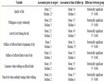
Table ane. Selection of respondents/households for sampling from villages living in the vicinity of the slaughter houses in the outskirts of Aligarh city.
Source: Based on field Survey 2011-12.
Table ii. Aligarh urban center's contribution to meat production (2013).
Source: one. Based on information collected from field Survey 2011-2012, 2. Amar Ujala, Hindi Daily Newspaper, 16th Sept. 2013.
The Kattighar at Makdoomnagar was one time located outside the metropolis municipal purlieus in the city outskirts along Mathura bypass road. Presently due to growth of city population, the urban center has expanded and this Kattighar is at present surrounded by a dense population. People are forced to settle near and around the Kattighar having unhealthy weather. The Kattighar at Makdoomnagar is run past the Aligarh Municipality since 1955, the Municipality contracted out the slaughter house to a private contractor who further sub-contracted to iii butchers who slaughter animals in a private godowns which accept no arrangement of drinking water, ventilation and disposal facility. I butcher slaughters about seventy buffaloes per day. At least 2500 buffaloes are slaughtered in these godowns daily and the meat is supplied to the city and various other cities (Khurja, Mathura, Delhi etc.) All the animals to be slaughtered accept to undergo wellness checkup (Uttar Pradesh Nagar Nigam Act., 1955) but no rules are followed here. Now this slaughter firm has become sometime and dilapidated without any bones amenities similar water connections, boundary wall, wrotten gate, kutcha (uncemented) floor, no solid and liquid waste disposal facility etc. The waste of slaughtered animals is thrown and dumped in the landfill site, some of the waste such equally hides and solid waste are sold to private parties while waste matter water and claret is washed away and discharged

Figure ii. Location of sampled villages in the vicinity of (i) Hind agro industries Ltd (anupshahar Road); (ii) Frigorifco conserva allana (Mathura Road).
in kutcha nalas (uncemented drains) around the Kattighar. The whole area is kutcha and the condition of the place worsens during the rainy season. The area is totally polluted with animal parts strewn all over, having foulsmell and filth all effectually. Since April, 2012 this Kattighar has closed downward [5] [half-dozen] .
• Illegal slaughtering inside individual households Numerous illegal abattoirs are often housed in Aligarh's individual households. Field surveys have revealed that in colonies, such equally Sarai Rahman, Shah Jamal, Sarai Sultani, Jamalpur, Tantanpara, Quazi Sarai, Quazipara, Khawaja Chowk, Turkaman gate, Bani Islayn, Khaidora, Bhujpura etc. more than than fourscore percent of the households slaughter buffaloes. These are two room tenements with a shop in front, where at v in the forenoon, a buffalo is slaughtered in one of the rooms. All the waste is merely washed off into the drain, clogging the sewer lines. Illegal slaughtering in Aligarh cannot exist banned [half dozen] . An alternative for this trouble was to penalize the kattighars which practice not better the conditions of slaughtering and disposal of waste product and to give the kattighars in the paw of private parties for its proper development.
Slaughter houses in the urban center outskirts
Privatization of slaughter houses was thought to be a certain panacea for various ills of kattighars. Indepth investigation revealed that these slaughter houses were too creating the same problems. The showtime slaughter house was established in 1992 and gradually six meat factories were established in the metropolis outskirts within 7 km from the city centre (Figure one and Effigy 2, Table 3), i along Anupshahar road, 4 along Mathura bypass road and ane along G.T road (towards New Delhi). These factories have a capacity to slaughter >1000 animal per day. But as per the local reports these factories are slaughtering most 25,000 animals daily. Open/illegal slaughtering was rampant and such practices are also creating environmental havoc. Animals parts are seen strewn all over the fields and open places, dogs and vultures could be seen preying over these wretched remains; dirt festering all around; animal blood, h2o and debris is straight disposed into the drains; there is horrible stench/filth which makes your inwards wrench with revulsion. For indepth investigation ii slaughter houses the Hind Agro Industries (located along Anupshahar road at Chherat hamlet, most seven km away from the metropolis centre) and Frigorifico Conservation Allana Sons Ltd. (located forth Mathura by pass route, at Talaspur Khurd, nearly 5 km away from the city centre) were selected (Table 3, Figure 1 and Figure 2).
The Hind Agro, established in 1992 was slaughtering > 12,000 buffaloes daily which were brought from nearly districts (Khurja, Mathura, Meerut, Mujaffarnagar and from Bihar state). Sometimes truck load of animals are illegally brought for slaughtering. Information gathered from nearby villages revealed that waste product in
Tabular array 3. Location of slaughter houses in the aligarh city outskirts.
Note: Many small-scale units of privately owned open slaughter houses are located around Mathura route bypass. Source: Based on information collected from Field survey 2011-2012.
cluding carcass, bones, rumen contents etc. is thrown in open up areas/fields or in drains while the animate being blood, water is disposed into the Chherat drain which is muddied and chock-full and claret is seen flowing in it. When it overflows during the monsoon flavor, the dirty water spreads into the fields polluting both land and water even killing animals who drinkable this h2o. Living and sustaining in the nearby villages has become very difficult for the residents due to stench and filth.
Frigorifico Conservation Allana Sons Ltd. was established in 1999. Two other factories established along Mathura bypass road at Talaspur Khurd village were H.Yard Agro Industries Ltd (in 2010) and Al Tabrak Nutrient and Frozen (in 2011). In Amarpur Kondla hamlet some other mill was established along Mathura bypass road (Al Dua Food Processing Pvt. Ltd (in 2011)). Thus, there were 4 meat factories and processing units and innumerable illegal/open slaughtering butchering over 25,000 animals daily disposing the waste in open up fields and claret in open drains i.e. in Mathura bypass nala (drain).
2. Bear upon of Slaughter Firm on the Surround and Wellness of Residents Living in Its Vicinity
Field investigations have revealed that all the slaughter houses suffer from very depression hygienic standards posing both environmental and wellness hazards due to detached disposal of waste, highly polluted effluent discharge and burning of bones and hooves etc. Since unauthorized and illicit slaughtering has increased, these problems have also increased manifolds.
Waste product generated in the slaughter houses includes both solid (carcass, bones, hooves, rumen, intestine contents, dung etc.) and liquid waste (claret, urine, internal fluids including water used for washing). According to a rough estimate a buffalo weighs about 2 quintals and about 25 pct of the total torso weight becomes waste. Information technology generates 10 litres of waste product claret. Surveys of the slaughter houses have revealed that there were no special waste disposal system or treatment plants. The solid waste is either only thrown and dumped in the open fields or burnt or sold off to individual parties. While the liquid waste product is done away and discharged in nalas (Chherat drain and Mathura bypass drain) around the slaughtering area. Finally all the h2o containing claret and debris goes inside the Aligarh drain without treatment. This has led to land deposition, air and water pollution.
The results of survey on characteristics of the respondents (Tabular array 4(i)) shows that, 60 pct were males, 50
Table 4. Characteristics and perception/awareness of the respondents living in the vicinity of sampled slaughter houses in the outskirts of Aligarh City.
Source: Based on data nerveless from Field survey 2011-2012.
per centum were between the age of 20 to 39 years, 55 percent were married, 40 percent were educated, eighty percent were employed and the size of household of 53 percent was between v to 12. Nearly 37 percent were landlords and nearly 40 percentage reported staying in this area for five to 10 years. Regarding respondents perception and awareness (Table four(ii)) of slaughter firm and its upshot on surround and health, 95 percent were fully aware of closeness of slaughter house to their residence. Virtually 74 percentage reported of incidence of flies/insects and mosquitoes in high number spreading infection; 98 per centum reported of horrible odour from slaughter business firm; 78 percent reported of choking drains containing water with blood and debris; 58 percentage reported of drinking h2o contamination; 79 percent reported of pungent aroma from burning of fats and bones. Table 5(i) is showing the
Table five. Ecology and health impacts reported by respondents (in percentages) living in the selected villages in the vicinity of sampled slaughter houses in the outskirts of Aligarh city (2013).
Source: Based on data collected from Field survey 2011-2012.
ecology impacts every bit observed and reported by 300 respondents living in the selected villages in its immediate vicinity i.eastward. 0 - ane.five km and 160 respondents living in the selected villages little farther abroad i.east. ane.51 to 3 km. The results bear witness that state degradation, water and air pollution was higher in close vicinity of the slaughter house and as one goes farther away it decreases.
On the whole, nearly 3 fourth of the respondents reported that the slaughter house was a nuisance for them because it helped in spreading diverse infections. The presence of flies, insects in the dumped waste, mosquitoes in chocked drains, organisms in the drinking water source, the presence of dirt and pungent odour in the air etc. all these are significant source of health risk. In this study residents living in the vicinity of the slaughter house i.e. 0 to 3 km reported of headache, general torso ache and weakness, excessive coughing, shortness of breath and other respiratory symptoms, fever, typhoid fever, jaundice, cholera, diarrhoea/dysentery and malaria. Results indicated in Tabular array 5(two) shows that the affliction take been grouped nether three categories, the water borne, air borne and other diseases. Solid waste product and waste water is non a direct threat to health simply when accumulates in the neighbourhood it becomes a source of health hazards, when it decomposes it favours breeding of flies, it attracts rodents and vermins; the pathogens nowadays in the waste may be conveyed back to human'due south food past flies and dust, it is a source of nuisance from smell and unsightly advent, and drainage from waste material dumps pollutes the surface and ground water. The resultant diseases are typhoid and paratyphoid, fever, diarrhoea/dysentery, cholera, hookworm, other intestinal infections etc. Mosquitos population also increases due to open blocked drains causing malaria [7] . A large number of disease vectors alive, breed or feed in the neighbourhood of the slaughter houses. Microbial tests carried out on water samples collected from the resident's source of drinking water i.e. tube wells indicated presence of organism which are a significant health take chances [8] . Not just is the odor/stench from the slaughter business firm helping in lowering the air quality merely the boiling of fat, bones, meat has besides helped in spreading the bad olfactory property. Residents from the metropolis and villages reported that with the wind comes pungent odour. The residents reported that they could not spend time exterior their home due to olfactory property. They experienced astringent headache, body anguish, loss of appetite, loss of breath, excessive coughs etc. Data collected with the help of field surveys and presented in Tabular array 5 shows that: (Table v, Figure 3)
1) The respondents living in closer vicinity i.e. 0 to 1.5 km from the slaughter business firm were suffering motility

Figure 3. Health Problems and occurrence of diseases reported past respondents (in percentages) living in the vicinity of slaughter houses. (i) Along Anupshahar Route; (2) Forth Mathura featherbed Road. Source: Based on field survey 2011-2012.
from both environmental hazards and wellness problems than those living further away i.e. between 1.5 to 3 km 2) The conditions were worst for residents living in the vicinity of slaughter houses located along Mathura bypass route as compared to residents living in the vicinity of slaughter houses located along Anupshahar route.
three. Conclusions
The foregoing analysis reveals that:
1) Slaughter houses were located in the midst of residential areas whether they were inside the city or in the outskirts. The local government and municipality should properly chalk out plans for its proper place i.e. outside the residential areas and so they do not degrade the surround and harm the health of the residents.
2) The slaughter business firm activities and direction practices have direct and indirect touch on the land, water and air quality more than in its vicinity. The disposal of waste in open fields and drains, the effluent discharge of water with blood and waste product in open drains, the disposal of blood borings and burning of solid waste destroy the environmental quality.
3) Fifty-fifty today slaughter houses suffer from enormous hygienic and environmental hazards which affect the health of residents living in its vicinity. They reported the occurrence of headache, bodyache, breathiness, nausea/vomiting, coughing and other waterborne and air borne diseases.
4) Conditions were worst for:
• Residents living in the immediate vicinity of the slaughter house and
• For those living in the vicinity of slaughter houses along Mathura bypass route.
Then, special attention should be paid past planners, government bodies and local municipal authorities to meliorate the atmospheric condition of these areas.
5) Control and management of slaughter firm requires special legislative laws and rules.
• Site location-slaughter houses should be located outside populated areas downwind from the city far away from water body. Landuse policies should be framed accordingly.
• Land contagion—proper storage of waste inside the premises of the slaughter house in an aerated area to minimize biodegradation and pungent/foul smell
• Water contamination—presence of a liquid waste collection organisation to avert any h2o discharges outside the bounds
• Air emissions—planting trees effectually the slaughter houses development of proper aerated storage area to minimize unpleasant olfactory property.
For health, hygiene and safety regular check up of meat handlers, caput comprehend, gloves etc. for them should exist carried out. Storing meat in hygienic atmospheric condition and provision of all necessary facilities and infrastructure in the slaughter houses should be checked. To a higher place all, the animals brought for slaughtering should be checked by the veterinary surgeon.
The regime should enforce the existing laws strictly related to slaughter houses. There should be a proper licensing system for slaughter houses. Public sensation and enlightment on possible affect of pollution from slaughter house wastes should exist embarked upon past authorities and non-government organizations and public participation is necessary for the development of policies for slaughter firm direction.
References
- The Times of Bharat, New Delhi, 6 August 2013.
- Aligarh Evolution Authority (ADA), Aligarh Master Plan 2021. Vikas Bhawan, Aligarh City.
- Aligarh Nagar Nigam (Aligarh Municipal Corporation) (2011) Sewa Bhawan. Aligarh Metropolis.
- Demography of India (2011) Registrar General and Census Commissioner. New Delhi.
- Dainik Jagran, Aligarh City. 7 September 2013.
- Down to Earth (2003) Centre for Scientific discipline and Surround, New Delhi.
- Salahuddin Mohd. (2011) Household Level Waste Management in Aligarh Urban center. B.R. Publishers, New Delhi.
- Singh, A.L. and Rehman, A. (2001) Malaria and Related Surroundings Issues in India: A Instance Study of Aligarh City, Geo Journal, 53, 89-99.
NOTES

*Respective author.
mcdonaldshoul1964.blogspot.com
Source: https://www.scirp.org/html/10-6702198_46296.htm

Post a Comment for "Peer Reviewed Article on How Awful Slaughterhouses Are"